For wedding caterers
Two thousand guests. Fifty counters.
One screen that knows what is late.
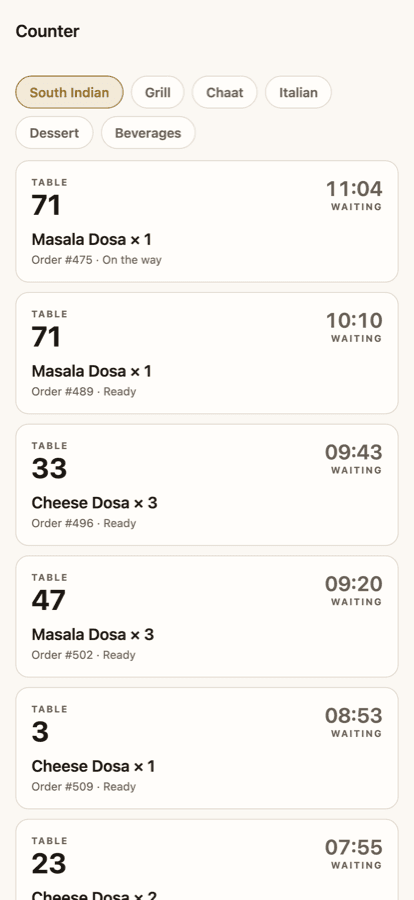
Shaadi OS runs the floor at large weddings. An attendant takes an order at the table; it routes itself to the counter that cooks it, a the chef taps once as it leaves the pass, and the manager watches the whole lawn on one screen.
What happens to one order
- 01TableA guest asks for a dosa, a tikka and a jalebi.
- 02AttendantOne order, taken on a phone in four taps.
- 03CountersIt splits itself across three kitchens. Nobody chose.
- 04HandoverThe chef taps once as a runner takes it. No app in the runner's hand.
- 05TableThe attendant confirms it arrived — and every step is timestamped.
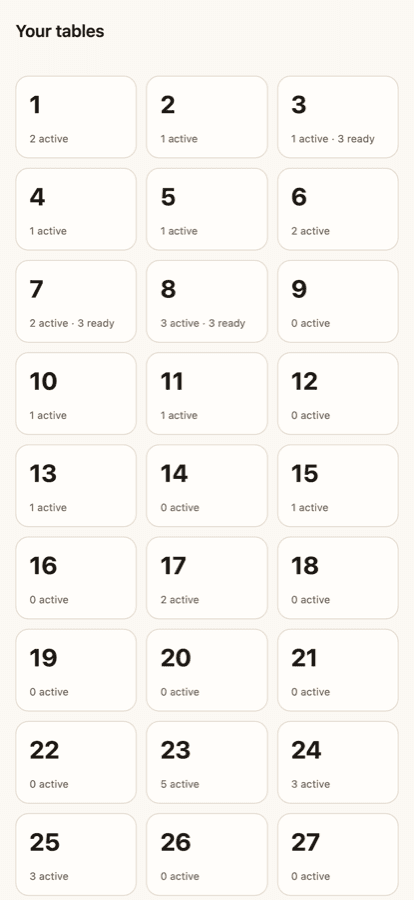
The counter that is behind, while it still matters
Most caterers learn which counter fell apart at the end of the night, from a client. The command centre shows prep times per counter as service runs, so two people can be moved off dessert before anyone complains.
- 300
- orders a second
- measured under load, not projected
- 90ms
- to place an order
- 95th percentile, Mumbai region
- 1,000
- guests a wedding
- 100 tables, six live counters
- 0
- orders lost offline
- held on the device, sent once
Built for the parts that actually go wrong
Dead spots in the venue
An order taken with no signal is held on the device and sends itself when the network returns — once, however many times it retries. Close the app, flatten the battery: it is still there.
No phone in every hand
Runners carry food, not devices. The chef closes each dish as he hands it over, so you still see how long it sat plated — the number that tells you a counter is falling behind.
Your data, walled off
Each catering company is isolated inside the database itself, not by the interface being careful. Hosted in Mumbai, on encrypted storage.
See it on a wedding that is already running.
The demo is a live event mid-service — six counters, a thousand guests, one counter deliberately behind. You take the order yourself.
Book a live demo